
6 Beautiful Hummingbirds to See in the Cloudforest of KM18, Cali, Colombia
The cloudforests of KM18, just outside Cali, are one of Colombia’s most magical birding hotspots—lush, misty, and full of life. Among all the treasures found here, the hummingbirds steal the show. Colombia is a global hummingbird hotspot, boasting over 160 species nationwide, with more than 50 species recorded around Cali and the Western Andes alone.
Hummingbirds are not just breathtaking—they are vital to the health of the cloudforest ecosystem. Their nectar-feeding behaviors allow them to pollinate flowers that no other animals can, maintaining plant diversity and genetic flow. By feeding on insects, they also control small arthropod populations. Seasonal movements and territorial behaviors ensure continuous pollination across forest patches, while their nesting cycles align with peak flower availability to optimize chick survival. Protecting hummingbirds at KM18 means protecting Colombia’s cloudforest biodiversity, water sources, and the delicate ecological balance that makes this region a true natural wonder.
For travelers, photographers, and nature lovers, this region offers some of the best close-up encounters with these dazzling high-Andean species. Here are six stunning hummingbirds you can admire during your visit.
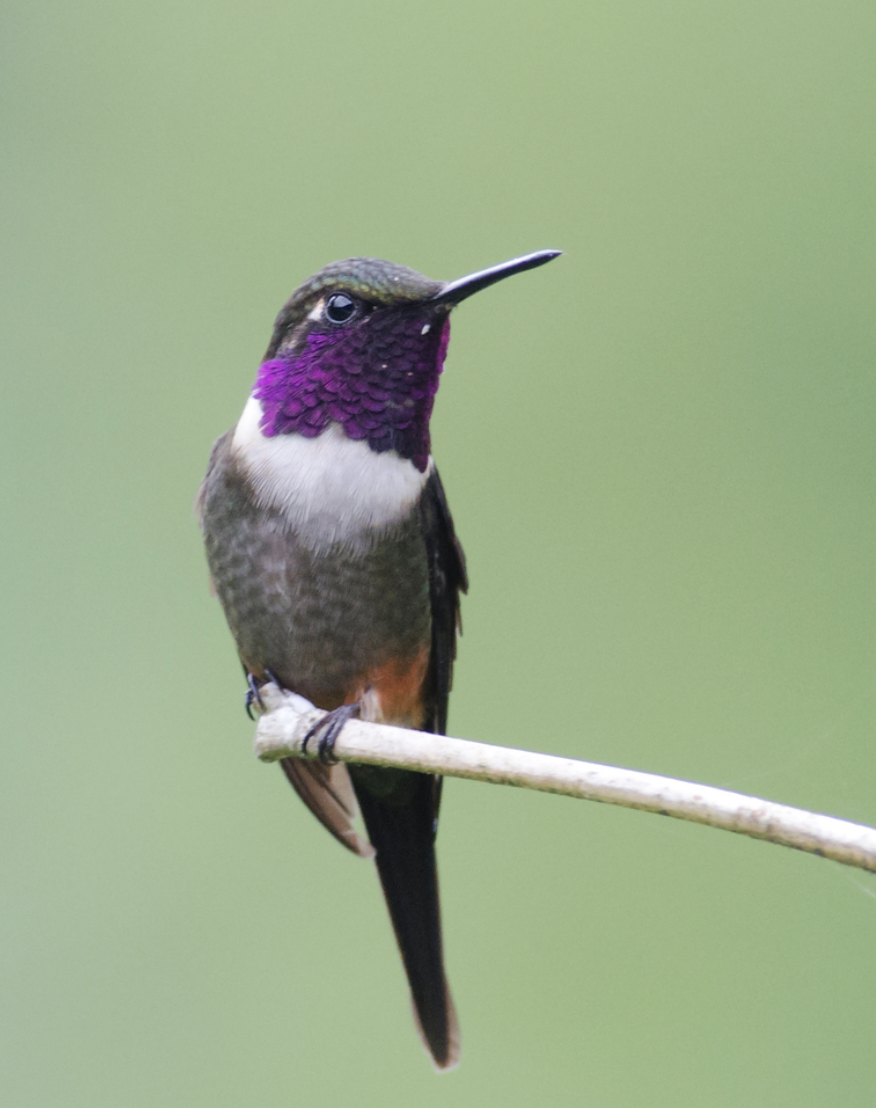
1.The Purple-throated Woodstar (Calliphlox mitchellii)
The Purple-throated Woodstar (Calliphlox mitchellii) is one of those tiny Andean hummingbirds that feels almost unreal when you see it in the field. Despite its miniature size, it carries an elegance that stands out—males flash a deep purple throat that glows when the light hits just right, while females show softer tones with warm cinnamon sides. You’ll usually spot them hovering like little insects around forest edges, gardens, and flowering shrubs in the western Andes. They move fast, almost like they’re showing off, and their tail-fanning display is classic hummingbird charm. A small bird, yes—but with a personality that refuses to be overlooked.
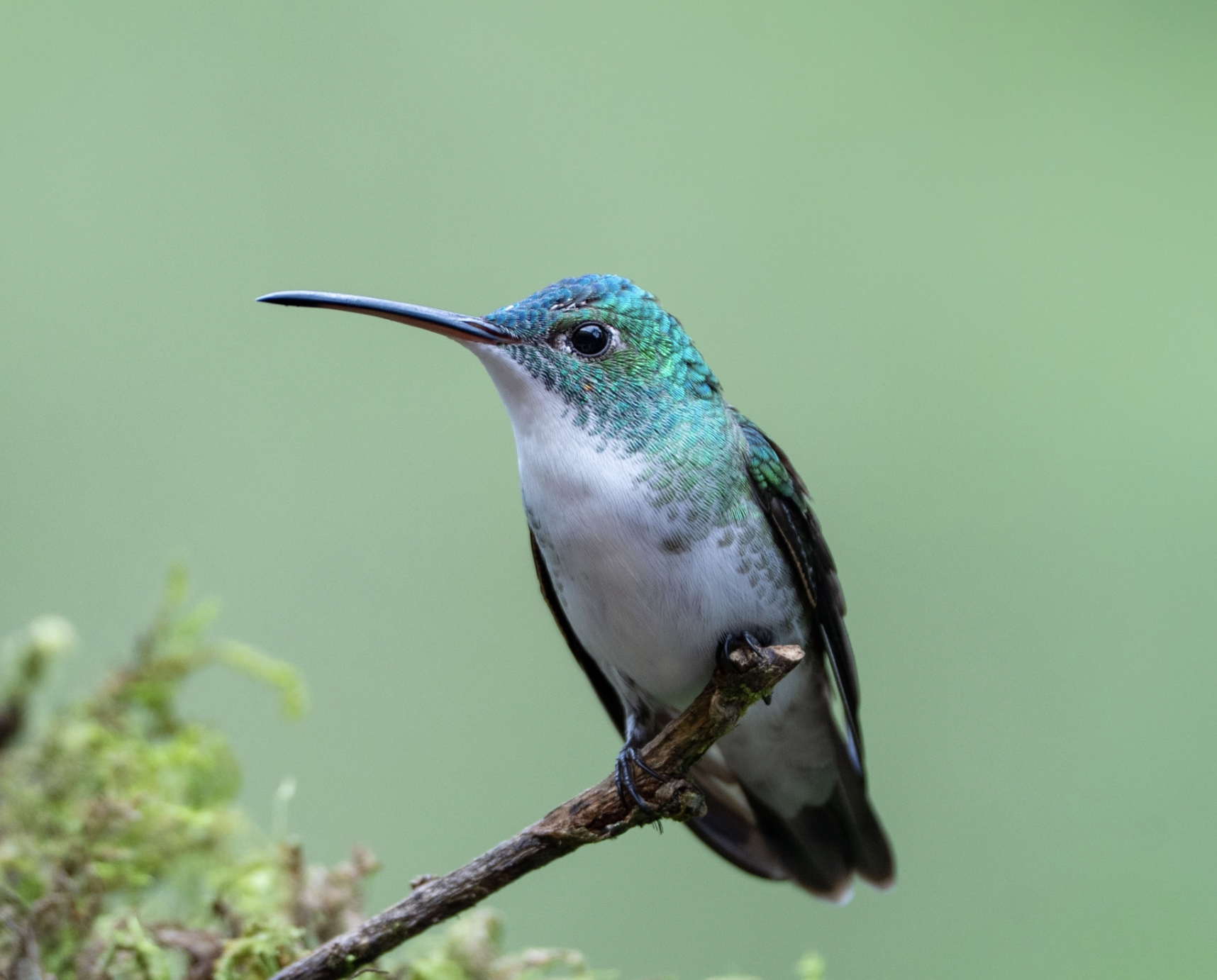
2. The Andean Emerald (Amazilia andina)
The Andean Emerald (Amazilia andina) is a small, vibrant hummingbird native to the Andes of Colombia and western Ecuador. Known for its bright green shimmering plumage, clean white underparts, and a straight reddish bill with a dark tip, it’s a frequent visitor to gardens, forest edges, and coffee-growing landscapes. Energetic and agile, it flashes through vegetation with the quick, precise movements that make hummingbirds such captivating species to observe.
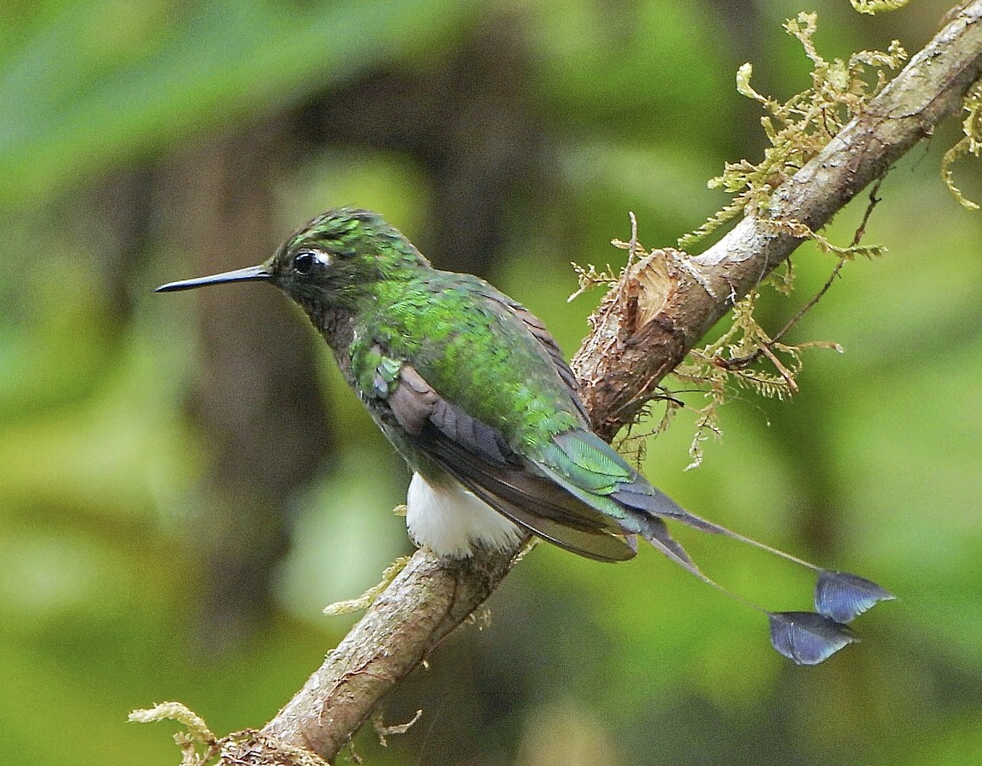
3. Booted Racket-tail (Ocreatus underwoodii)
The Booted Racket-tail (Ocreatus underwoodii) is one of the most distinctive hummingbirds of the Andes, instantly recognizable by its fluffy white “boots” on the legs and its long, elegant tail tipped with two dark, racket-shaped feathers. Males show off these ornaments with acrobatic flight displays that look almost unreal, while females keep a simpler tail but still carry the same graceful charm. You’ll find this species in humid montane forests and flowering clearings, where it darts confidently from bloom to bloom. It’s a small bird with a striking silhouette—delicate, unique, and always a highlight for anyone lucky enough to see it.
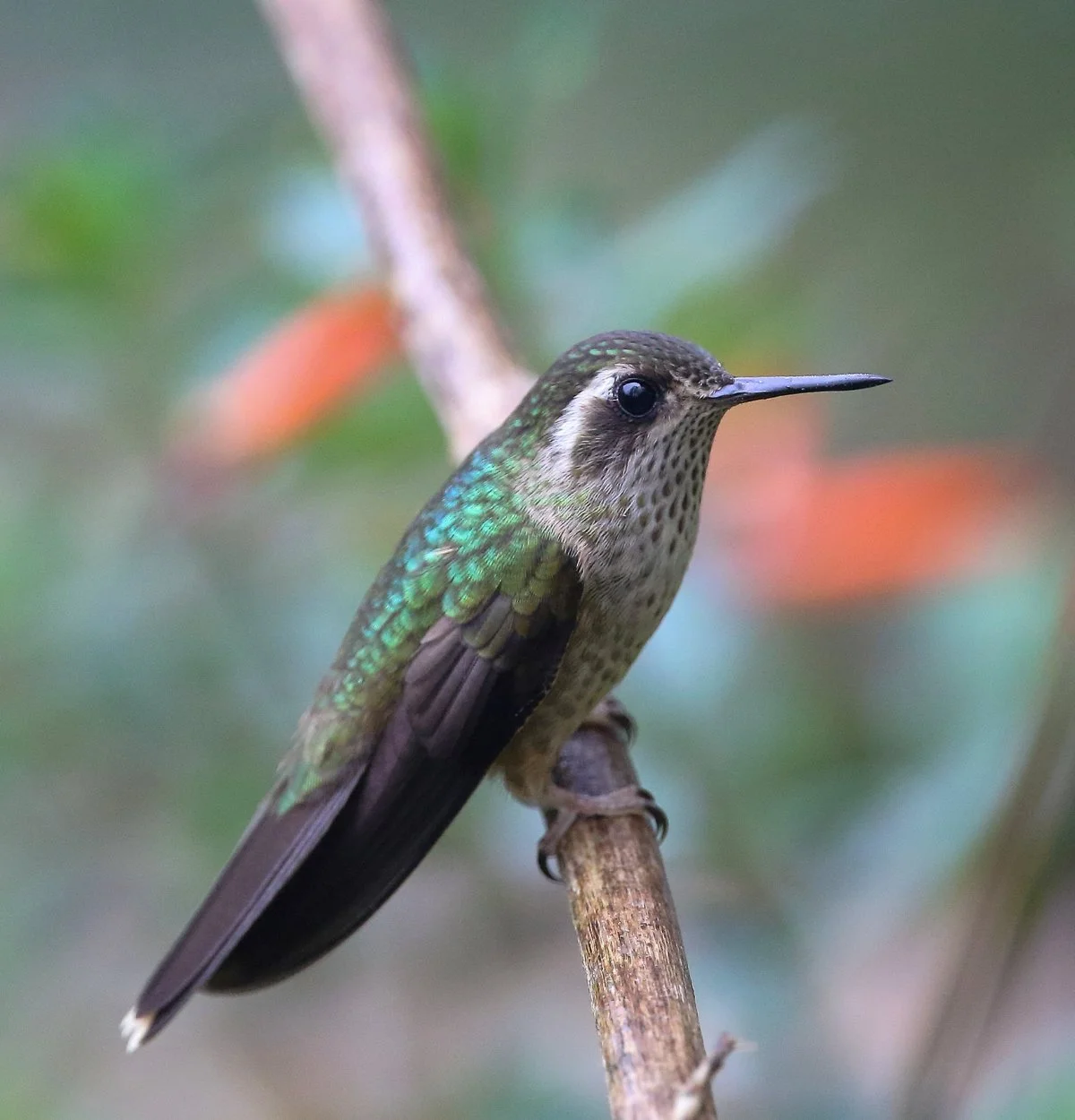
4. Speckled Hummingbird (Adelomyia melanogenys)
Small and subtle, yet full of charm. Its warm brown and speckled patterns blend beautifully with the forest understory, offering a more understated but equally fascinating sight. The Speckled Hummingbird plays a role in micro-pollination of mid-story flowers and shrubs. By feeding and defending its territory, it supports flower reproduction and forest regeneration. Its nesting and feeding cycles are synchronized with flowering periods, ensuring young have enough nectar to thrive.
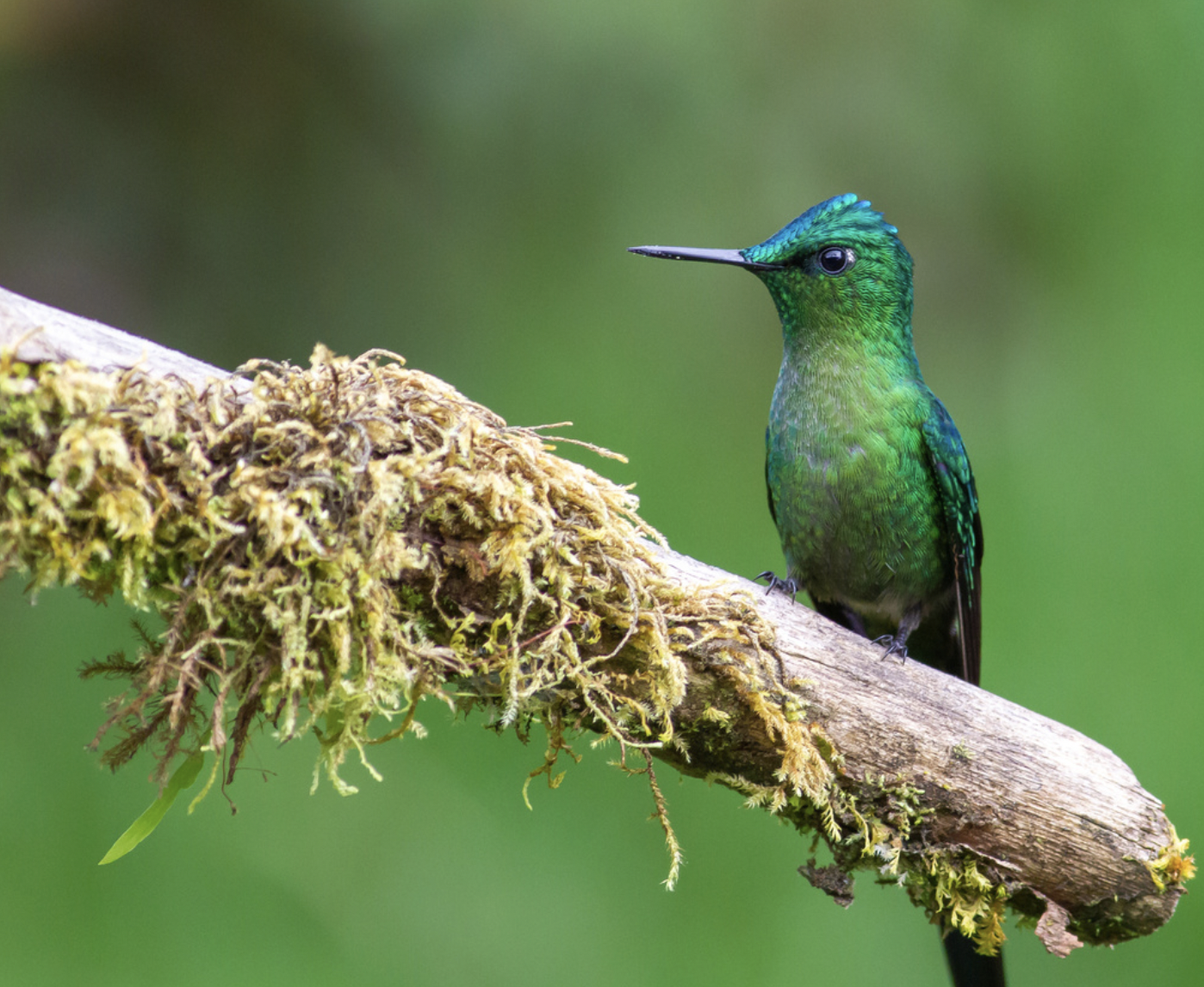
5. Long-tailed Sylph (Aglaiocercus kingii)
A jewel of the cloudforest, males carry sapphire-blue tail streamers longer than their bodies. When sunlight hits them, they sparkle like streaks of neon through the misty forest. These hummingbirds are major pollinators for certain high-altitude flowers, helping maintain the reproductive success of endemic plants. Their nesting periods are timed to coincide with flower abundance, supporting chick survival. By moving pollen across ridges and valleys, they help sustain the broader Andean ecosystem.
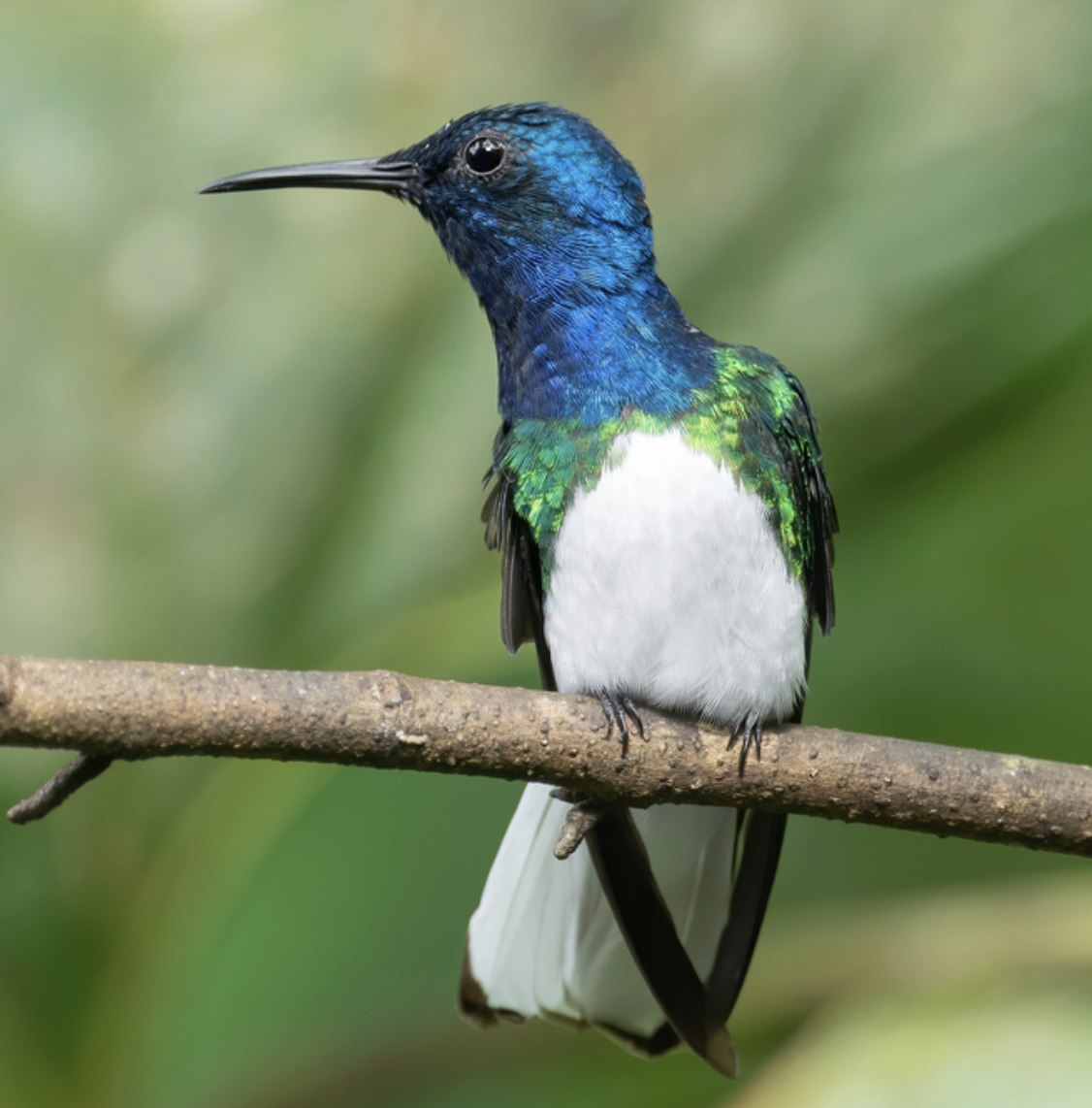
6. White-necked Jacobin (Florisuga mellivora)
The White-necked Jacobin (Florisuga mellivora) is one of the most striking hummingbirds of the Neotropics, instantly recognizable by its clean white collar, deep-blue head, and glossy emerald body. Males are particularly eye-catching, shining like polished metal when the sunlight hits them, while females show a variety of plumage patterns ranging from speckled throats to green-and-white mixes. This species is often seen at forest edges, gardens, and flowering clearings, where it confidently dominates feeders and chases off smaller hummingbirds with its bold, energetic flight. Elegant, vibrant, and full of character, the White-necked Jacobin always steals the show.
Want to see these beautiful birds flying incredibly close to you? Ecotourspuravida offers stunning birdwatching locations just an hour from Cali.
Join us to learn about their feeding behavior, reproductive cycles, and the conservation efforts underway to protect their habitats — all while capturing amazing photos of hummingbirds and high-Andean species in their natural environment.
A special thank-you to the amazing photographers (Inaturalist) who beautifully captured these species:
Colibrí de Mitchell – Jhos Vandermeulen
Amazilia Andina – Aleksey_Browka
Booted Racket-tail – Anne Pierce
Colibrí Jaspeado – Pat Isaacson
Colibrí Coludo Azul – Adam Wardsell
White-necked Jacobin – Martin Ross
Contact us to learn more about our specialized hummingbird and Andean birding tours.
📞 Phone: +57 302 707 0553, +1 786 819 5874
📧 Email: ecotourspuravida79@gmail.com
#Birdwatching #Hummingbirds #BootedRacketTail #BirdsOfColombia #AndeanWildlife #BirdwatchingColombia #NatureLovers #BirdPhotography #EcoTourism #EcotoursPuraVida #CaliColombia